inventory Case Study

Turning Inventory Analytics Into Operational Decisions

Used inventory analytics to determine where forecasting effort, inventory policy changes, and replenishment strategies would have the greatest business impact.

This case study demonstrates how analytics informed inventory decisions that improved service levels, reduced inventory risk, and aligned inventory investment with business value.

business question

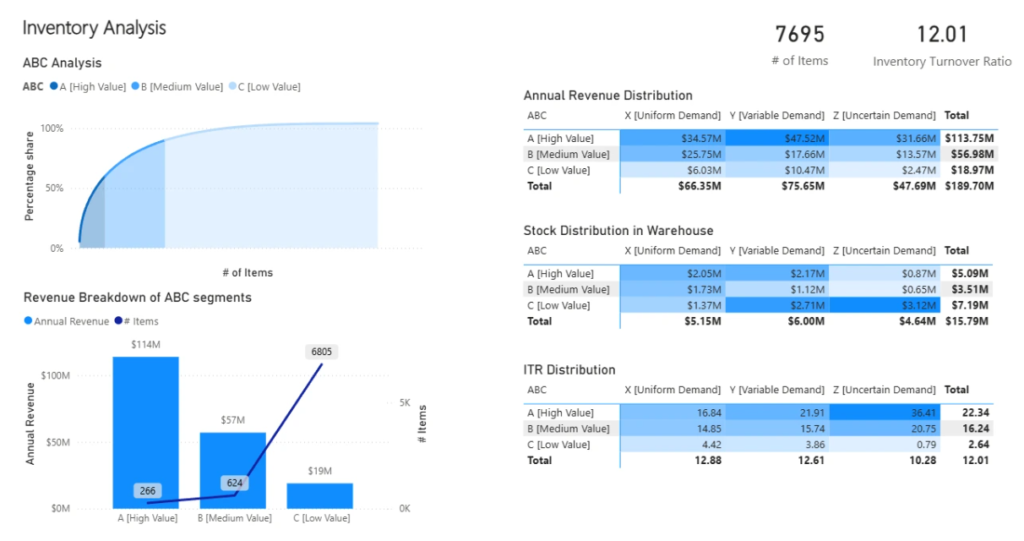
Following the inventory analysis (refer case study here), leadership wanted to know:

The challenge shifted from understanding inventory to deciding how to manage it.

Data Analysis

Evaluated: 

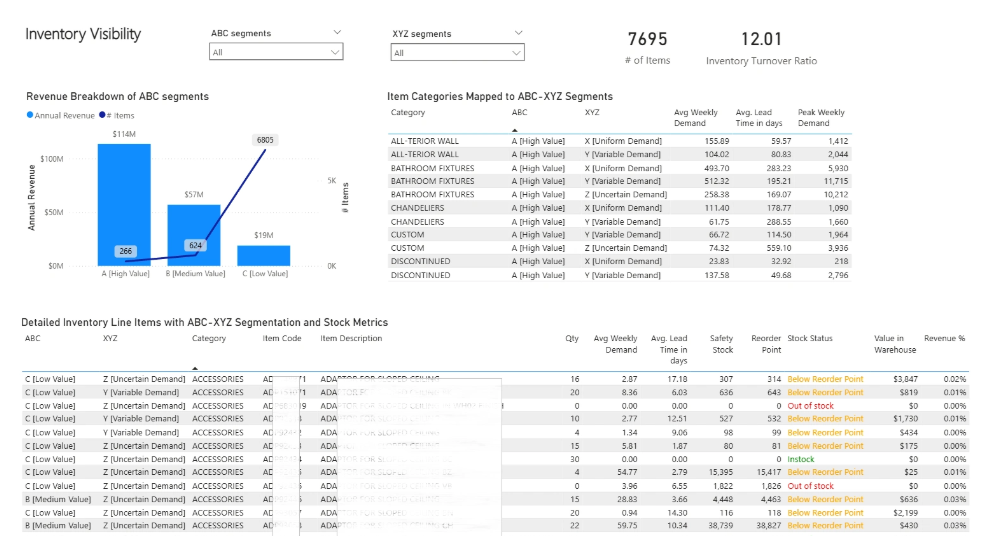
Mapped each SKU segment to an operational strategy.

What The Data Revealed

OBSERVATION: A-category products generated the majority of revenue despite representing a relatively small portion of the SKU portfolio.

BUSINESS IMPLICATIONStockouts on these products have a disproportionate impact on revenue and customer satisfaction.

Recommended Action: Increase forecasting accuracy and replenishment focus for high-value products.

OBSERVATION: Demand predictability differed considerably between product segments

BUSINESS IMPLICATION: Applying a single forecasting approach across all products would lead to inefficient planning.

Recommended Action: Align forecasting and inventory policies with product demand characteristics.

OBSERVATION: Significant share of inventory value was tied up in low-contributing products.

BUSINESS IMPLICATION: Working capital was being consumed by inventory that generated limited financial return.

Recommended Action: Review stocking policies and inventory exposure for low-value products.

OBSERVATION: Many low-value products consumed capital because of stocking decisions rather than forecasting errors.

BUSINESS IMPLICATION: Improving forecast accuracy alone would not solve inventory inefficiencies.

Recommended Action: Focus on inventory policy optimisation alongside forecasting improvements.
INVENTORY DECISION FRAMEWORK

AX SKUs

Business priority: Protect Revenue
Recommended action: Forecast aggressively (monthly), maintain high service level and frequent replenishment reviews

AY SKUs

Business priority: Manage Seasonality
Recommended action: Seasonal forecasting and inventory planning

AZ SKUs

Business priority: Reduce Service Risk
Recommended action: Safety stock optimisation and supplier lead-time management

CZ SKUs

Business priority: Challenge Stocking Strategy
Recommended action: Reduce inventory exposure and evaluate make-to-order opportunities

priority action plan

Initiative -> Expected Outcome

Reduce CZ Inventory -> Release working capital tied up in low-performing inventory

Introduce Make-To-Order Policies -> Reduce dead stock and carrying costs

Forecast AX Products More Closely -> Improve product availability and reduce stockouts

Optimise Safety Stock For AZ Products -> Improve service levels while managing uncertainty

Rationalise Suppliers -> Reduce operational complexity and improve purchasing efficiency

business impact

See what this could look like for you, practically

If any of these stories felt familiar, we can start small.

You don’t need a big team or a heavy rebuild to get value. We’ll begin with 1–2 questions your business actually needs answered and build only what you’re ready to use.

Free • No obligation • Practical next steps

Add Your Heading Text Here